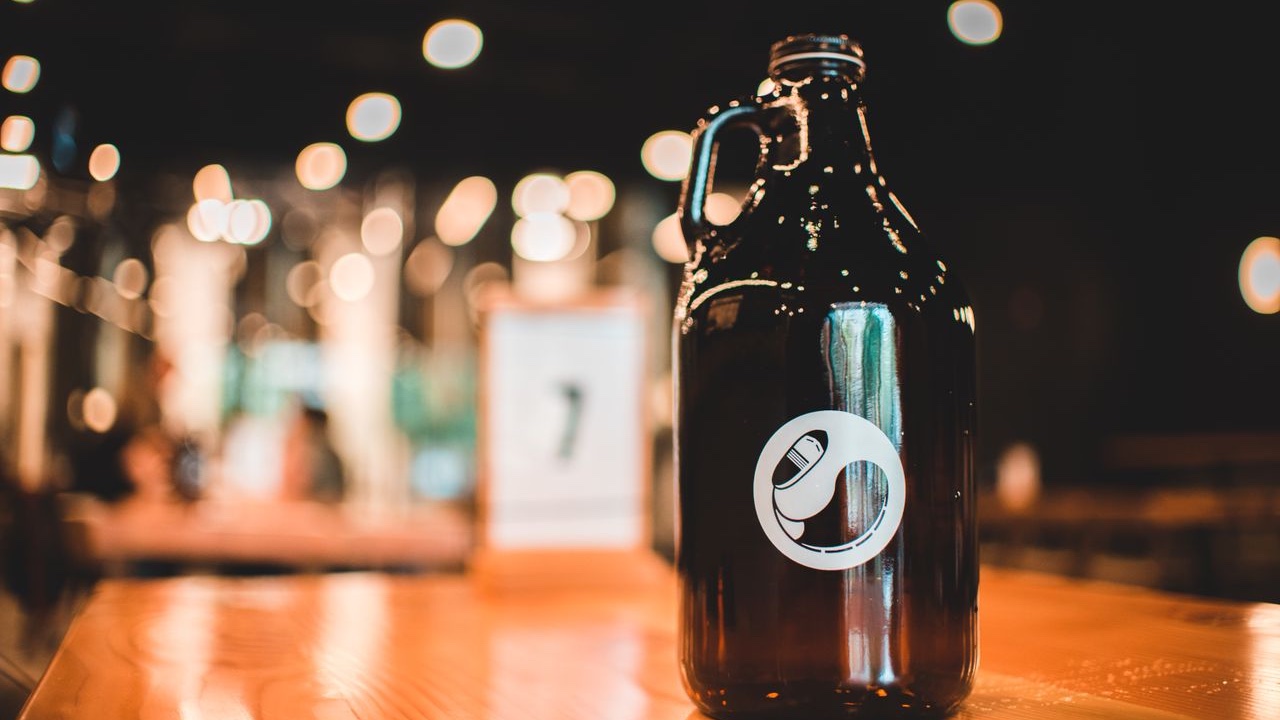
A few years ago, growlers were mostly something serious homebrewing enthusiasts brought in to get filled at a brewery taproom. Now they’re showing up as a deliberate part of the revenue model at a growing number of craft bars and small-production breweries — prominently displayed, sold with refill programs, and used as a way to extend the relationship with customers who can’t always come in.
The shift isn’t driven by novelty. It’s driven by a few practical economics that work out better than most operators expect.
The Margin Math on Draft Beer to Go
Draft beer served at the bar is one of the highest-margin products in any taproom. The same logic extends to growler fills: the beer cost is the same as what goes into a pint glass, and the container is either provided by the customer or sold at a markup that more than covers the cost. A 64oz growler fill at a small brewery typically retails for something close to what four pints would cost on draft, with no additional service labor beyond the fill.
Compare that to the alternative takeout format — four-pack cans or bottles — and the economics look different. Canning or bottling requires packaging equipment or contract packaging, labeling, TTB compliance for the product sold by the bottle, and distribution infrastructure. A growler fill program requires a fill station, properly sealed containers, and a trained staff member. The startup cost difference is significant.
For breweries producing under 500 barrels a year, the growler program often becomes the primary retail takeout channel for exactly this reason — it lets them sell packaged beer without packaging infrastructure.
The Customer Retention Angle
A customer who buys a branded growler has made a small commitment. The container has your logo on it, it sits in their refrigerator or on their kitchen shelf, and it needs to be refilled. That’s a recurring reason to come back that a single pint glass or a four-pack doesn’t create.
Bars and breweries that run growler programs with a deposit-and-return model or a loyalty refill discount see measurably better return visit rates among growler owners than their general customer base. The mechanism is simple: ownership creates a reason to return that doesn’t depend on actively deciding to come back.
This effect is stronger with wholesale growlers that carry the venue’s branding — a logo-engraved stainless growler is a walking advertisement that customers actually want to carry around, unlike a logo’d plastic bag or a paper receipt.
The Sustainability Positioning Has Real Customer Impact
Reusable containers have become a meaningful purchasing factor for a portion of the craft beer consumer base that tends to overlap with the most engaged, highest-spending customers. A growler program positions the bar or brewery as environmentally conscious without requiring any meaningful operational change — the reusable container is already the economically sensible choice for other reasons.
This isn’t primarily a marketing calculation. But the fact that the sustainable choice and the economically rational choice are the same thing makes it easier to communicate and easier for customers to feel good about participating. A growler fill is both cheaper packaging and less waste — customers who care about the second point often end up being the ones who sustain the program.
Where the Growler Model Works and Where It Doesn’t
The growler takeout model works best for establishments with a regular local customer base — people who live or work nearby, come in regularly, and have a reason to return for refills. It doesn’t translate as well to high-tourist-traffic locations where most customers are one-time visitors who won’t come back for a refill regardless of how much they enjoyed the beer.
It also works better for beers that hold reasonably well for 24-48 hours after filling — most ales, lagers, and amber styles fit this. Highly carbonated styles and certain hazy IPAs are more sensitive to the headspace oxygen introduced during filling, and venues serving those styles need either a CO2-purge fill system or a shorter sell-by window.
The container choice matters too. Glass growlers are traditional and have good presentation value, but they’re heavy and breakable. Stainless steel growlers cost more upfront for the customer but keep beer cold significantly longer and survive being dropped. Venues that sell both tend to find that stainless converts customers who are serious about their takeout beer, while glass works for occasional buyers who just want to grab a fill on their way home.
The commonality across successful programs is the same: a consistent refill experience, staff who know how to fill properly (minimize splash, purge headspace), and containers that reinforce rather than undermine the product they’re carrying.